
info@epra.go.ke
0709336000
0202847000
FUEL PRICE INDEX
The Economic Regulation arm of the Authority undertakes the following broad functions:
- Energy Planning
- Energy Pricing and Competition analysis
- Regulatory Research and Policy Analysis
- Maintaining energy data and statistics
- Monitoring Compliance of Regulations
The Authority is mandated to regulate the energy sector in a fair, transparent and predictable manner consistent with government policy and sensitive to stakeholder interests.
Products and services you can expect from us are (among others):
- Retail Tariffs Review Policy Framework
- Retail Tariffs: level and structure
- Bulk Tariffs: level and structure
- EHS Policy Framework: guidelines and standard
- Environment, Health and Safety: Monitoring, compliance and enforcement
- Complaints & Disputes Resolutions
- Approval of Trading Arrangements: Power Purchase, Transmission and Distribution Service Contracts
- Licensing
- Policy Implementation
- Legal/Regulatory
- Information generation and dissemination
- Conferences, seminars and workshops
To streamline the Electricity sub-sector EPRA, together with industry stakeholders, has developed
Draft Energy (Electricity Tariff ) Regulations, 2022,
Draft Energy (Regulatory Accounts) Regulations, 2022,
Draft Electricity (Generation, Transmission, Distribution and Supply) Tariff Setting Guidelines
Draft Regulatory Impact Assessment (RIA) Study For Draft Electricity Tariffs And Regulatory Accounts Regulations In Kenya
Please click on the links below to download the respective documents.
Draft Energy (Electricity Tariff) Regulations, 2022
Draft Energy (Electricity Regulatory Accounts) Regulations, 2022
Section 11 (b) of the Energy Act, 2019 states that the Authority shall “set, review and adjust electric power tariffs and tariff structures and investigate tariff charges, whether or not a specific application has been made for a tariff adjustment.”
Tariff review is a systematic process involving the following steps:
- Demand forecasting for the bulk and retail markets informed by an understanding of the social, economic, and political environment and their impact on the key parameters driving demand
- Generation and transmission planning to meet the forecast demand: This involves long range planning of the mix of generating capacity in terms of technology, and preferred developer: whether Public or Private Sector. It also involves planning for the transmission and distribution network development in order to enable the conveyance of the power generated to the final consumer. The outcome of this process is the 20-year rolling Least Cost Power Development Plan.
- Determination of the sector revenue requirements based on forecasts of costs likely to be incurred for generation, transmission, distribution and supply of power.
- Determination of marginal costs of generation, transmission, distribution and retailing; based on approved pricing periods.
- Allocation of total revenue requirement among approved customer classes on the basis of the marginal costs and price sensitivity
- Computation of initial retail tariff proposals
- Sensitivity analysis of the proposed retail tariffs in order to fine-tune the proposed retail tariffs.
- Public exposure of the proposed tariffs, leading to public debate and hearing
- Determination of the final retail tariffs
The schedule of Tariff 2022-2023-2025/2026, establishes cost items that incorporates the retail tariff charged by Kenya Power. The current applicable tariffs is as follows;
https://www.epra.go.ke/wp-content/plugins/wonderplugin-pdf-embed/pdfjslight/web/viewer.html?v=2&file=https://www.epra.go.ke/wp-content/uploads/2023/10/Approved-tarrifs_organized.pdf#page=1&zoom=auto,842,613
The Authority undertakes retail pricing of petroleum products (Diesel, Super Petrol and Kerosene) as stipulated in the Energy (Petroleum Pricing) Regulations, 2022.
The Pricing Regulations introduced a formula that EPRA uses in determining the maximum wholesale and retail pump prices of Super Petrol, Regular Petrol, Diesel and Kerosene (the Regulated Products) as follows:
The landed cost of petroleum products shall be determined as follows:
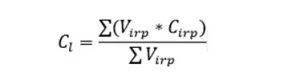
Cl is the weighted average cost in Kenya shillings per litre of petroleum products imported through the OTS through a gazetted primary storage depot;
Virp is the volume in litres of a cargo of petroleum product imported through the OTS and discharged at the port of Mombasa from the 10th day of the previous month to the 9th day of the pricing month;
Cirp is the unit cost of a cargo of petroleum product imported through the OTS and discharged at the port of Mombasa from the 10th day of the previous month to the 9th day of the pricing month in Kenya Shillings per litre;
The maximum wholesale price of petroleum products in Kenya Shillings per litre shall be determined as the sum of the following
WHOLESALE PRICES
Pw= Cl+ Jhc+Cp+ Lps+Pt-f-Lpt +Css + Lss+ Cf+ Mw+ Y + T + VAT
Where—
Pw = the maximum wholesale price
Cl = the landed cost of imported petroleum products
Jhc = the jetty handling costs
Cp = the primary storage costs
Lps = the allowable losses on primary storage
Pt = the primary transportation costs
Lpt = the allowable losses on primary transport
Css = the secondary storage costs
Lss = the allowable losses on secondary storage
Cf= the inventory financing costs
Mw = the wholesale margin
Y = is any other prudently incurred cost approved by the Authority
T = the applicable taxes (Excluding VAT)
VAT= Value Added Tax
RETAIL PRICES
For super petrol, kerosene and automotive diesel, the Pricing formula used is:
The maximum retail price of petroleum products shall be the sum of the following –
Pr = Pw + Ts + Mri + Mro + VAT
Where –
Pr is the maximum retail price of petroleum products
Ts is the cost of transporting petroleum products from a secondary storage depot to a retail dispensing site.
Mri is the retail margin corresponding to the investments associated with a benchmark retail dispensing site.
Mro is the retail margin corresponding to the operating costs associated with a benchmark retail dispensing site.
The Authority may, by a notice in the Kenya Gazette, publish the Jhc, Cp, Pt, Cf, Lss, Lps, Ts, Css, x-factor, Kpt, Krd, Mri, Mro, Mw, and the list of pricing towns from time to time.
The Authority may, by a notice in the Kenya Gazette introduce a new factor provided that such a factor is a verified prudent cost.
The retail and wholesale prices for Super Petrol, Automotive Diesel and Kerosene are published monthly on the 15th of every month.
The Authority is empowered by Section 10 subsection (hh) of the Energy Act, 2019 to protect consumer, investor and other stakeholder interests. To achieve this, the Authority monitors the energy sector to ensure implementation of, and the observance of the principles of fair competition. In executing its mandate, the Authority works closely with statutory authorities such as the Competition Authority of Kenya, Kenya Revenue Authority, the Capital Markets Authority among others.
The Authority undertakes the following activities in ensuring regulatory compliance and fair competition:
- Reviewing Tariff Policy framework for transmission, generation and distribution. This ensures that utility companies meet revenue requirements for sustainable operations; support
- Assess trading arrangements including Power Purchase Agreements and Network Service Contracts;
- Monitoring compliance of approved tariffs;
- Conducting stakeholder engagements to seek views on tariffs charged;
- Determination of Pass through costs by to ensure that only prudently incurred costs are passed on to the consumer;
- Monitoring and audit of generation plants and transmission & distribution networks to ensure power sustainable and reliable supply of power.
Petroleum subsector
- Publishing of Monthly Retail pricing of Petroleum Products (AGO, PMS & DPK) and the Wholesale and retail Margins;
- Monitoring of compliance to the maximum set retail prices;
- Monitoring of Petroleum facilities in the downstream sectors. This include Pipeline and storage facilities.
Regulatory Research and Policy Analysis
The Authority is mandated under section 10 subsection (jj) of the Energy Act ,2019 to collect and maintain energy data. To fulfil this mandate, EPRA undertakes regulatory research and policy analysis in electricity, petroleum and renewable energy sub sectors and provides such information and statistics to the Cabinet Secretary as he may require from time to time.
Research ensures informed decision making in the energy sector as well as innovation that culminates into efficient and sustainable service delivery.
The Authority performs this function through:
Coordinating Preparation of Cost of Service Studies
In order to ensure objective review, adjusting of electric power tariffs and tariff structures, to determine tariff charges and petroleum pump prices, the Authority co-ordinates preparation of cost of service studies for electricity and petroleum sub sectors in Kenya, as well as other energy cost related studies. Some of the studies undertaken in the recent past include:
- Cost of Service Study for the Electricity Sub Sector
- Cost of Service for Petroleum Products Supply Chain
- Time of use Tariffs to Promote Commercial and Industrial Growth in Kenya
- Option for a Local Currency Power Purchase Agreement in Kenya
Undertaking Analytical Research and Policy Analysis
The Authority undertakes analytical research and coordinates development of policy and policy analysis. Under this function, the Authority has coordinated preparation of the following studies in recent times:
- Modeling Energy Transition in Kenya
- Strategies and Implementation Matrix to Improve Access of LPG in Kenya
- The impact of Oil Price Volatility on the Kenyan Economy
- The energy consumption patterns studies
Generation of Data, Statistics and Information in the Energy Sector
The department coordinates generation of data, statistics and information on the energy sector in line with Section 10 (jj) of the Energy Act, 2019. Some of the key outputs and information include:
- Annual Energy Balance Matrix for Kenya
- The Quarterly Energy Statistical Bulletin
- The Annual Quarterly statistical bulletins